Treatment
A pterygium, sometimes known as "surfer's eye", is a fleshy, wedge-shaped growth on the white of the eye that can slowly extend onto the clear cornea. Because it is non-cancerous and usually grows slowly, many people live with the condition for years without experiencing any trouble.
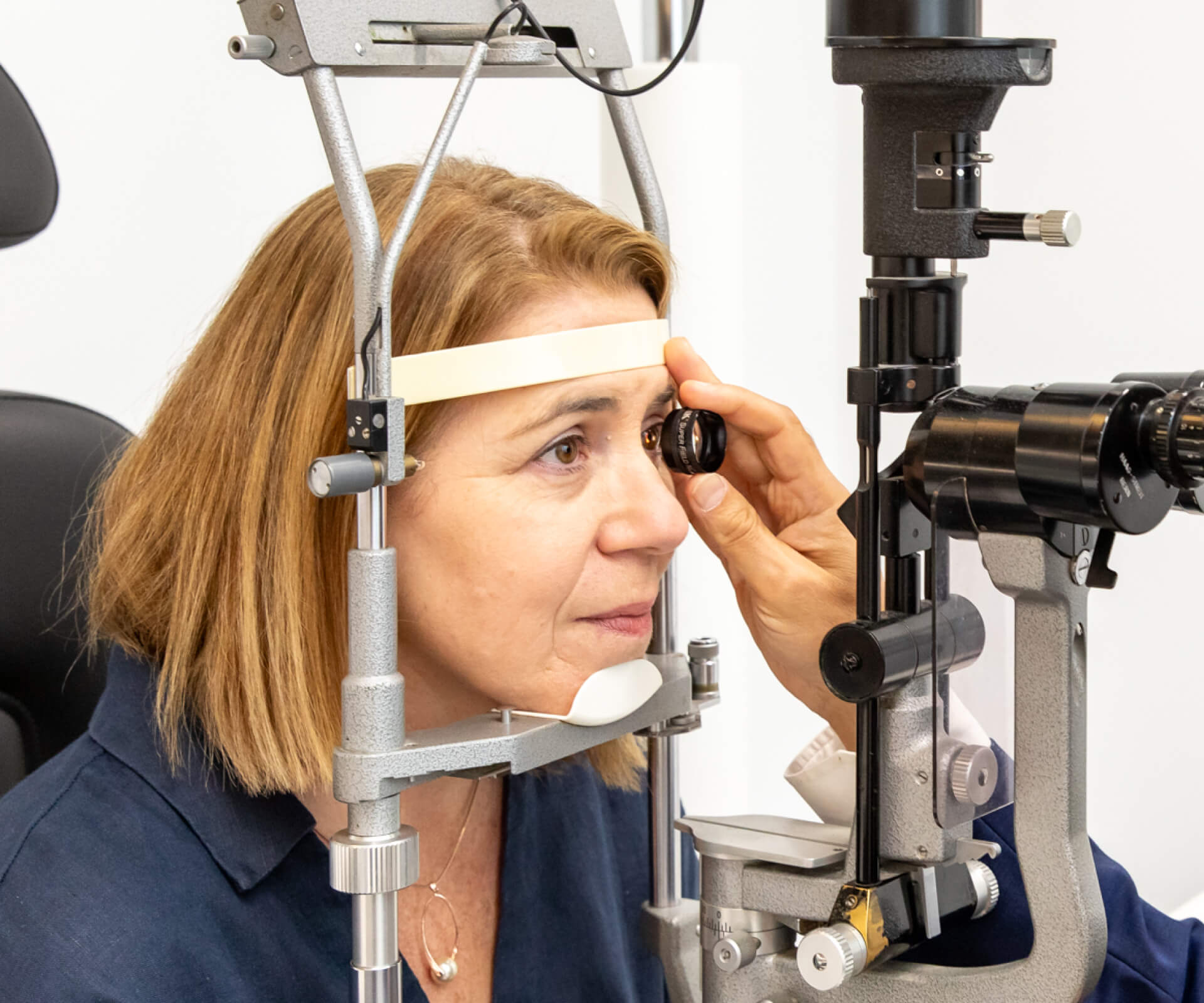
The specialist ophthalmologists at Eastwood Eye Surgery in Sydney routinely assess pterygia and provide surgical removal when the growth begins to affect a patient's vision or comfort.
The condition is strongly linked to lifelong sun and wind exposure, making it highly common among Australians who spend significant time working or playing outdoors.
Small and stable growths are frequently monitored rather than treated, with surgery generally reserved for cases that cause noticeable vision or comfort problems.
Surgical removal involves using a small graft of the patient's own tissue to cover the area, which significantly lowers the chance of regrowth compared to simple removal alone.
Because no surgical technique can entirely rule out recurrence, ongoing UV protection remains essential to help keep the risk as low as possible.
The procedure is performed as a day surgery under local anaesthetic, and most patients return home the same day.
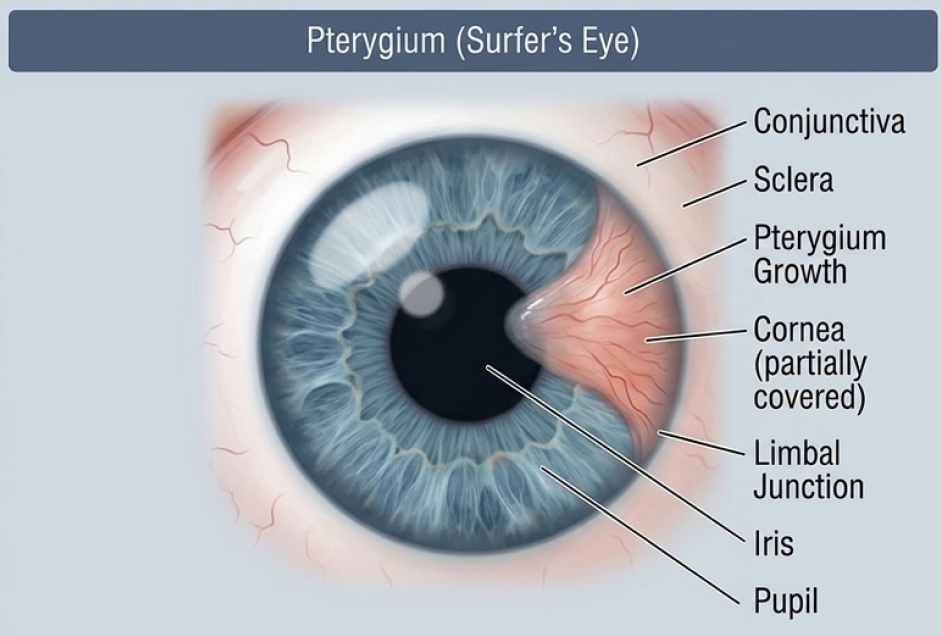
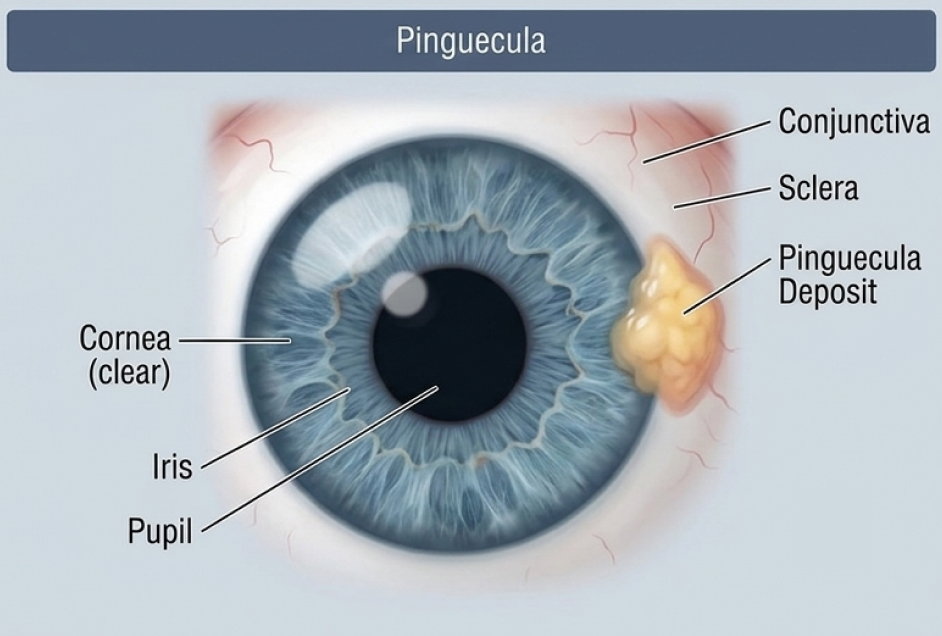
A pterygium is an overgrowth of the conjunctiva, the thin, clear membrane that covers the white of the eye. The tissue thickens into a raised, often triangular shape that can creep across the cornea, the clear front window of the eye.
It helps to tell a pterygium apart from a pinguecula, a related but smaller, yellowish deposit on the white of the eye that does not grow onto the cornea. A pinguecula is usually harmless and rarely needs surgery, whereas a pterygium is more active and can affect vision over time.
Pterygium is more common in sunny climates, which is why it is frequently seen in Australians with outdoor lifestyles, including farmers, tradespeople, and surfers.
The signs of a pterygium range from a purely cosmetic appearance to genuine discomfort and changes in vision. You may notice one or more of the following:
A pterygium commonly sits alongside dry eye, and the two can aggravate one another. We may also assess for related ocular surface problems described on our cornea and ocular surface page.
Not every pterygium needs surgery. A small, stable growth that causes little or no trouble is often best monitored, with lubricating eye drops to ease irritation and dryness alongside the sun-protection measures set out later on this page.
Your specialist will assess the size, position, and growth rate of the pterygium to decide whether surgery is advisable. Surgery is generally considered when:
Some people seek removal for appearance alone. This is an individual decision, and we approach it cautiously.
The main reasons for surgery are functional, protecting your vision and relieving symptoms. Your surgeon will discuss what is appropriate for you.
Pterygium surgery removes the growth and aims to reduce the chance of it returning. It is performed as a day procedure under local anaesthetic, so you are awake but the eye is numbed, and you go home the same day.
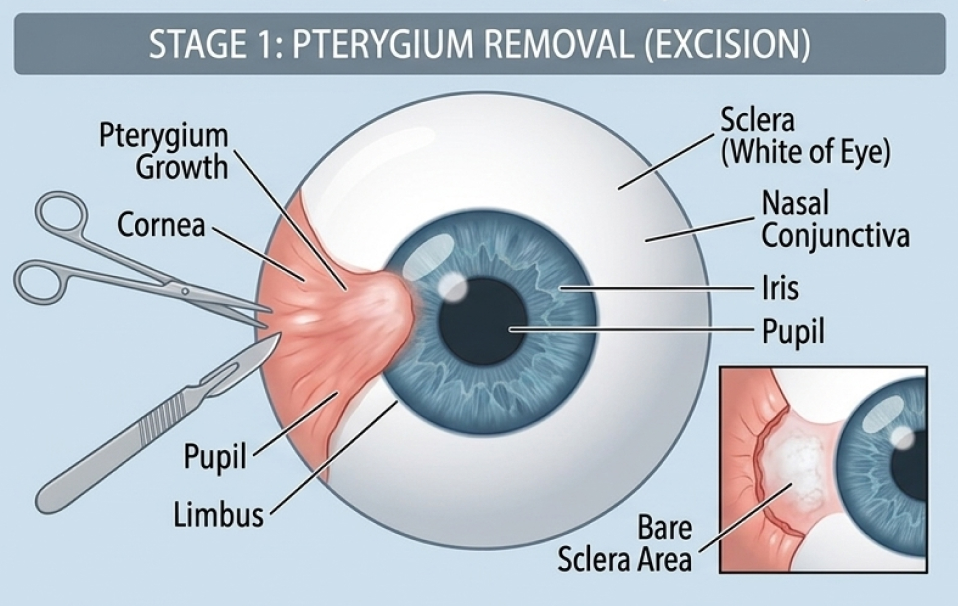
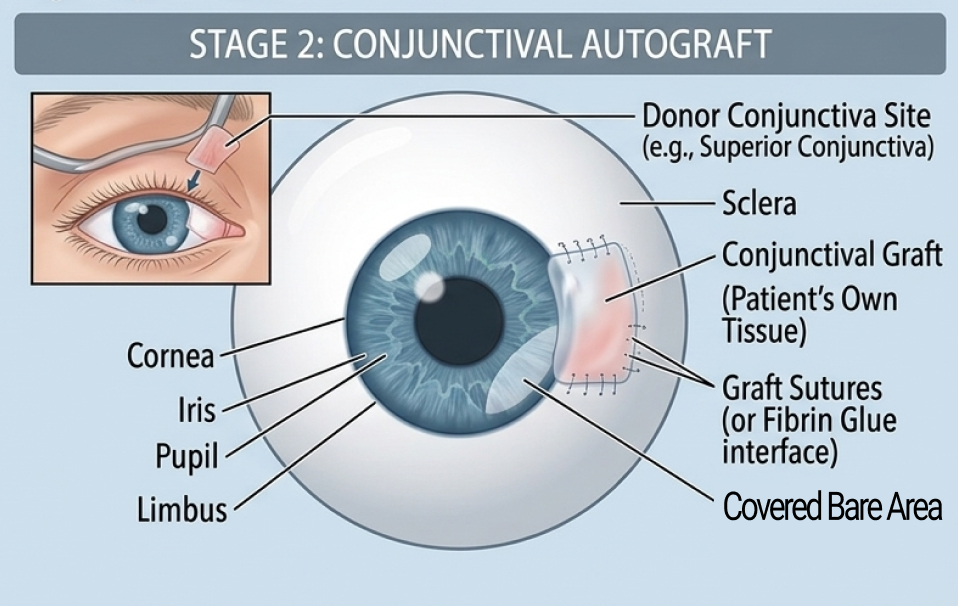
The procedure begins with excision, the careful removal of the pterygium tissue from the surface of the eye and the cornea. Removing the growth alone leaves a bare patch with a relatively high tendency to regrow.
To address this, your surgeon generally uses a conjunctival autograft, where a small piece of your own healthy conjunctiva, usually taken from under the upper eyelid, covers the area where the pterygium was removed.
The graft is secured with either fine dissolving sutures or a tissue adhesive (fibrin glue). This well-established technique is the main reason recurrence is less likely than with excision alone, which we explain further below.
Recovery after pterygium surgery takes several weeks, and some redness and discomfort early on is normal. In the first two to four weeks the eye can feel gritty, watery, and sore, and look red while it heals. This settles gradually.
You will be prescribed eye drops, typically an antibiotic and an anti-inflammatory (steroid), for several weeks after surgery. During recovery we generally advise that you:
Returning to work depends on your occupation. Office-based work is often possible within a few days, while dusty or outdoor work may require longer. Your surgeon will advise you based on your circumstances.
A pterygium can return after surgery in a proportion of patients, and it is important to be honest about this. No technique removes the possibility entirely. The graft approach described above and long-term sun protection both lower the risk, but neither rules it out. If a pterygium does recur, your surgeon will discuss the options with you.
At your first appointment, your surgeon will examine the pterygium and assess its size, position, and effect on your cornea and vision. We will explain what we find in plain language and discuss whether monitoring, lubricant drops, or surgery is right for you.
If surgery is recommended, post-operative reviews follow so we can check that the eye is healing well. Bringing your referral letter and any previous eye records helps us assess your eye accurately.
Sun protection is the most important step in slowing pterygium growth and lowering the chance of recurrence after surgery. Whether or not you have surgery, the following measures help:
The Better Health Channel provides further general information on pterygium and eye health.
The surgery is not usually painful because it is carried out under local anaesthetic, so the eye is numbed during the procedure. Some grittiness and soreness as the eye heals afterwards is normal, and prescribed eye drops help manage it.
It can return in some patients, as covered above. Your surgeon will discuss your individual risk and the options if a recurrence happens.
It is uncommon before adulthood and most often appears in people who have accumulated years of sun exposure. The earlier in life UV protection becomes a habit, the better.
The pages below cover the surface conditions a pterygium often sits alongside, what to bring to a first appointment, and the practice that carries out this surgery.
Dry eye, watery eye and blepharitis, the surface problems that commonly sit alongside a pterygium and can aggravate it.
Patient informationHow referrals work, what to bring to your first visit, and what happens at a specialist appointment.
About usThe specialist ophthalmologists who assess and remove pterygia, and how our Sydney practice cares for you.
To arrange an appointment, contact our rooms. This step is for you if you have been referred to Eastwood Eye Surgery, or you are living with a growth on the eye, ongoing irritation, or changes in your vision. Bring your referral letter and previous eye test results.
Pterygium services at Eastwood Eye Surgery are provided by specialist ophthalmologists. This information is general in nature and is not a substitute for personalised medical advice. Please speak with your ophthalmologist about your individual circumstances.