Eye condition
A cataract is a clouding of the eye's natural lens that develops gradually, most often with normal ageing. As the lens becomes less clear, your vision can turn blurred or hazy, and everyday tasks such as reading or night driving may become harder. Cataracts are very common and are usually treatable, so a specialist assessment is the sensible next step once they begin to affect daily life.
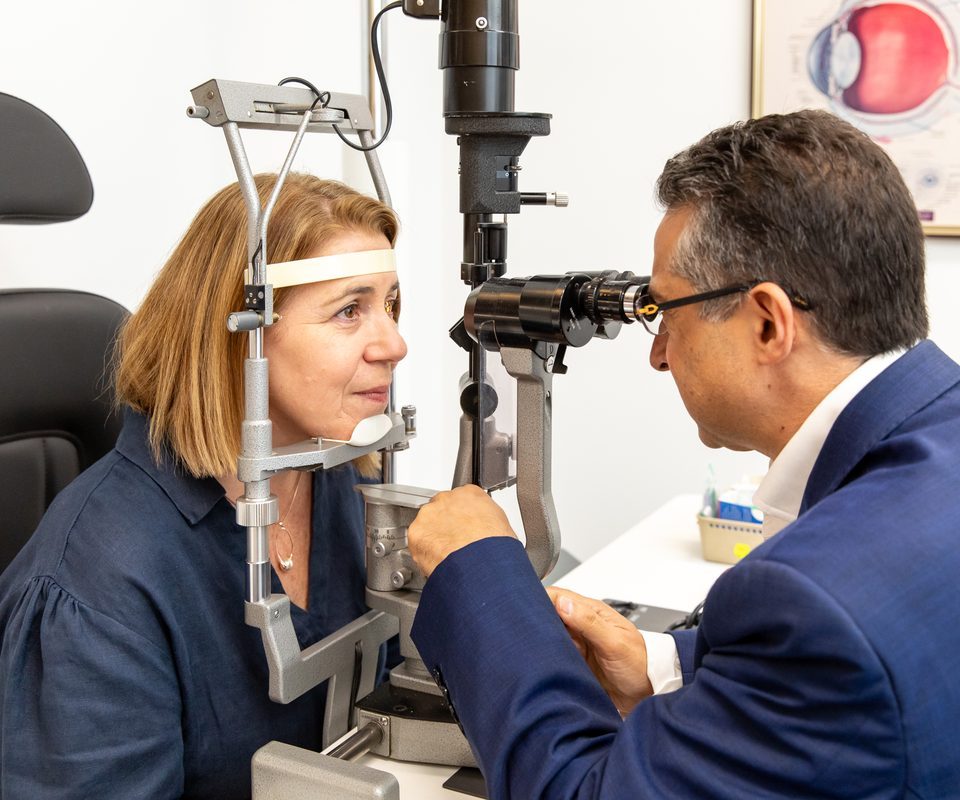
Cataracts are very common with age, particularly in people over 65, and both eyes are often affected at different rates.
Beyond blurred vision, patients often experience glare and halos around lights at night, faded or yellowed colours and frequent changes to spectacle prescriptions.
During surgery, the cloudy lens is removed and replaced with a clear artificial one, usually under local anaesthesia in around 15 to 30 minutes per eye.
To explore treatment options, an assessment by a specialist ophthalmologist is required, which can be arranged through a referral from an optometrist or GP.
While individual results vary, many patients notice an improvement in their vision within a few days and are often able to resume driving within a week or two.
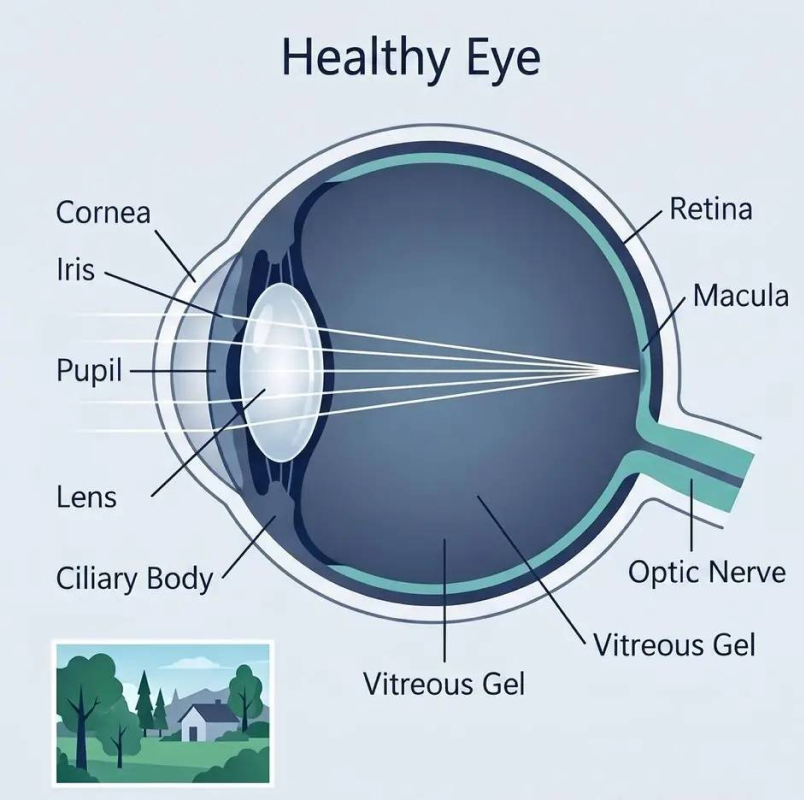
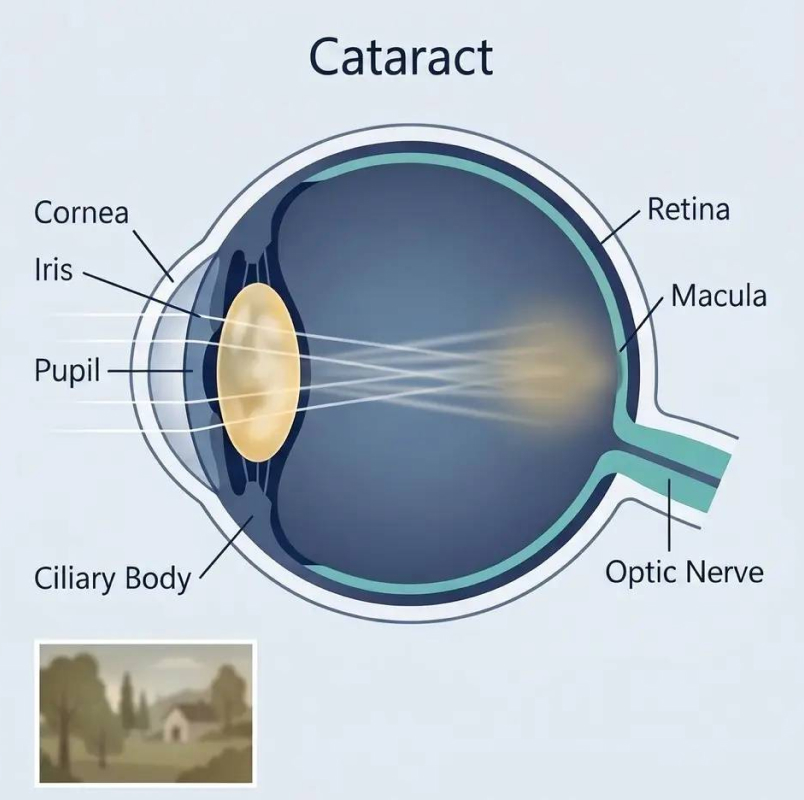
The natural lens sits just behind the coloured iris. When it is healthy it is clear, focusing light onto the retina to produce sharp images. Over time, the proteins inside the lens clump together and it turns cloudy. Light can no longer pass through cleanly, so your vision gradually deteriorates.
A cataract is not a disease of the retina or the optic nerve. In many patients, the rest of the eye stays healthy, which is why vision can improve after treatment.
Cataract symptoms develop slowly, and many people assume at first that they simply need a new spectacle prescription. Common signs include:
Objects appear less sharp, even with glasses.
Headlights and streetlights may dazzle or produce halos.
Bright sunlight or indoor lighting feels harsh.
Whites may seem off-white and colours lose their vibrancy.
A ghost image that persists even when the other eye is closed.
Your vision keeps shifting and needs new lenses often.
If any of these sound familiar, it is worth raising them with your optometrist or GP.
Age-related change is the most common cause, as the proteins inside the lens break down over decades. Several factors can contribute to earlier or faster development.
Less commonly, cataracts follow significant eye trauma or certain health conditions. Your specialist will advise on the assessment and management approach that suits your situation.
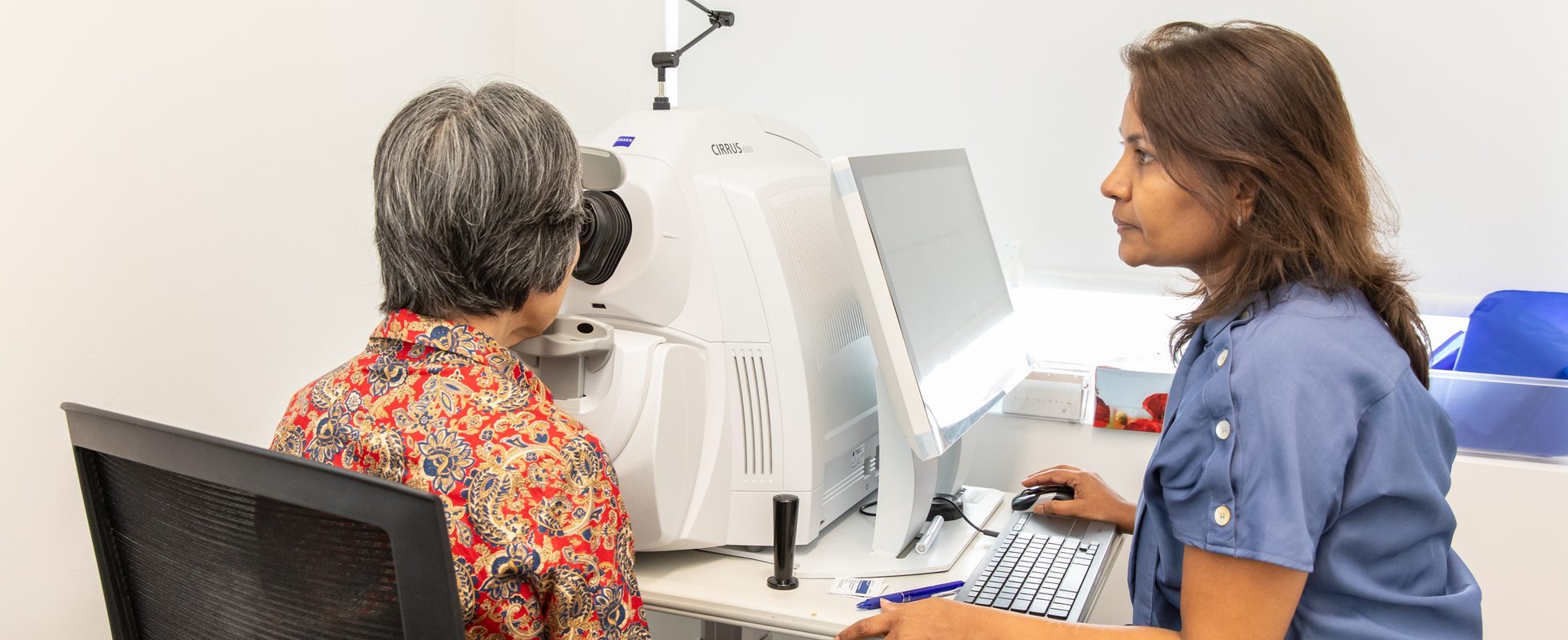
Cataracts are usually detected by an optometrist during a routine eye examination using a specialised microscope called a slit lamp to view and grade the clouding. If a cataract is affecting your vision, your optometrist or GP refers you to a specialist ophthalmologist, a medical doctor with extra training in eye conditions and surgery.
At your initial consultation we examine both eyes thoroughly. We assess your vision, examine the lens and the back of the eye, and consider whether surgery is likely to help.
If you have other conditions such as glaucoma or early macular degeneration, we take these into account when we plan your care.
You do not need to prepare. Please bring your referral letter, current spectacles, a list of medications, and any recent eye test results.
Surgery is the only established treatment once a cataract has formed. No eye drops or spectacles reverse the clouding, and glasses can compensate for only some early changes.
Surgery is generally considered when the cataract affects your ability to carry out everyday activities safely, such as reading, managing tasks at home, or driving at night.
The timing is individual. We assess how the cataract affects your vision and quality of life and discuss the options with you, because there is no single threshold that suits everyone.
Cataract surgery removes the cloudy natural lens and replaces it with a small, clear artificial lens called an intraocular lens, which stays in your eye long-term.
The most common technique is phacoemulsification. Through a very small incision, we use ultrasound energy to break the cloudy lens into tiny fragments and remove them. We then insert the folded artificial lens through the same incision, where it unfolds into place.
We typically use local anaesthesia, so you are awake during the procedure. Surgery takes around 15 to 30 minutes per eye, though you are at the facility for longer.
For more on the day itself and on recovery, see our cataract surgery page.
Several types of intraocular lens are available, each suited to different vision goals. We recommend the most appropriate option for your eye anatomy, prescription, and priorities.
| Lens Type | What it does | Typical use |
|---|---|---|
| Monofocal | What it doesFocuses at one distance, usually for distance vision | Typical useMost commonly used; most patients still need reading glasses for close work |
| Toric | What it doesCorrects astigmatism as well as the cataract | Typical useMay reduce dependence on distance glasses if you have significant astigmatism; eye measured precisely to confirm it suits you |
| Extended-depth-of-focus | What it doesBroader range of focus, aiming to reduce dependence on glasses for distance and intermediate tasks such as computer work | Typical useNot suitable for everyone; discussed at consultation |
No artificial lens replicates every function of a young, healthy natural lens. The right choice depends on your prescription, eye health, and lifestyle, which we discuss with you.

Your first consultation is with one of our specialist ophthalmologists. Dr Gagan Khannah has subspecialist experience in cataract surgery, and Dr Rajiv Shah in complex and anterior-segment cataract surgery.
If we recommend surgery, we explain the process, answer your questions, and arrange a pre-operative check. Surgery takes place at an accredited day surgery, and your surgeon's team will confirm the venue when your procedure is arranged. You will not stay overnight, and you will need someone to drive you home.
After surgery, we give you eye drops to support healing and see you for follow-up appointments as the eye settles. If your other eye is also affected, it is treated at a later visit, with the timing discussed in the questions below.
A specialist assessment is the next step if your optometrist or GP has told you that you have cataracts, or if you are noticing any of the vision changes described above.
If you notice any sudden changes in your vision, such as a rapid loss of vision, new floaters, or flashing lights, please contact your GP, optometrist, or an emergency department promptly. These may indicate a separate condition needing urgent assessment.
Most patients feel pressure or movement but no sharp pain. We numb your eye with anaesthetic drops and, in some cases, a local injection.
Mild discomfort, grittiness, or light sensitivity afterwards is common and usually settles with the drops we prescribe.
We operate on one eye at a time in most cases, with a gap of 2 to 4 weeks between procedures. This lets the first eye heal and the result be assessed before we treat the second.
It also lets us adjust the second lens choice if needed. We advise you on the right timing for your eyes.
The lens type implanted and the health of your eyes determine this, which is why the choice of replacement lens matters. The lens options are set out above.
We discuss realistic expectations with you beforehand.
Most patients notice improvement within the first few days. Driving is usually possible within a week or two, depending on the vision in your other eye and our advice.
We generally suggest avoiding strenuous activity and swimming for a period. Recovery varies, and we give you guidance at your follow-ups.
If cataracts are affecting your daily life, these pages cover the next step in more detail.
What the procedure involves, the lens options in full, the day itself and how recovery usually goes.
Your surgeonOur cataract subspecialist, and the surgeon most patients meet for a cataract assessment.
Your surgeonComplex and anterior-segment cataract surgery, for eyes that need a more involved approach.
A specialist assessment is the sensible next step once cataracts begin to affect daily life. Ask your optometrist or GP for a referral, then get in touch.
Book a Cataract AssessmentAll surgical procedures carry risks. At your consultation we discuss the risks and benefits of cataract surgery, taking into account your individual health and eye condition. Individual results vary. This information is general in nature and is not a substitute for personalised medical advice. Please speak with your ophthalmologist about your individual circumstances.