Treatment
Intravitreal injections deliver medicine directly into the eye to treat retinal conditions that threaten your central vision. They are used most often to manage wet age-related macular degeneration, diabetic macular oedema, and retinal vein occlusion. The medicine is given as intravitreal anti-VEGF therapy.
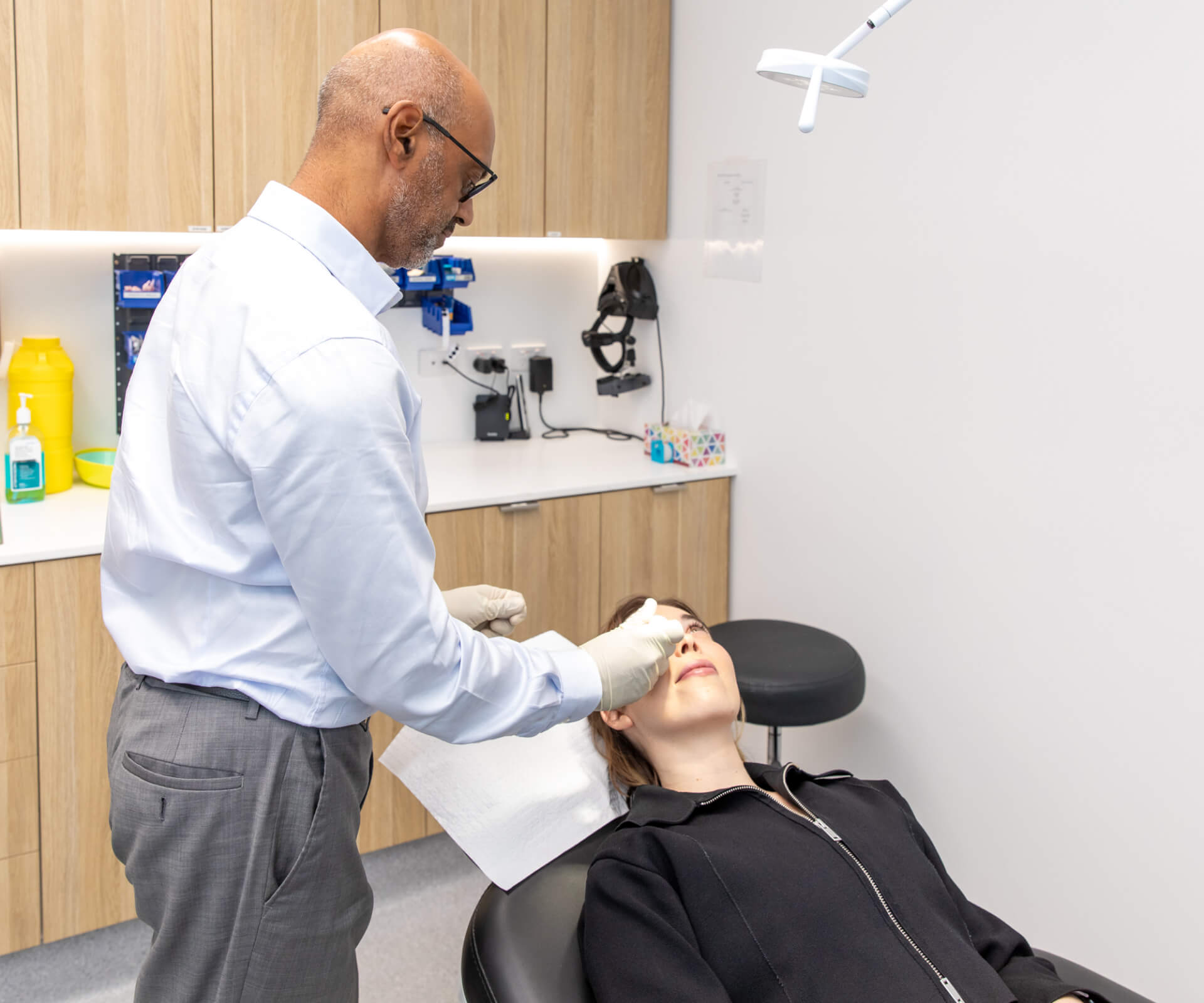
The procedure is quick, with anaesthetic drops numbing the eye before the injection is given. It takes only moments in a clean treatment room.
Treatment is typically an ongoing course rather than a one-off procedure, with most patients starting with regular injections spaced according to how the retina responds.
Progress is closely monitored at every visit using a detailed retinal scan to show how the eye is responding and help determine the timing for future treatments.
If your optometrist or GP has referred you to us, this page explains what the procedure involves and what to expect.
An intravitreal injection places a small amount of medicine into the vitreous cavity, the gel-filled space at the back of the eye, using a very fine needle. The medicine acts directly on the retina.
It treats the area where abnormal blood vessels or fluid are damaging the central vision you rely on. That central vision matters for reading, recognising faces, and driving.
The idea of an injection into the eye can sound alarming. In practice, the procedure is well established and quick, and we explain exactly what happens on the day further down this page.
Intravitreal injections treat several retinal conditions in which leaking or abnormal blood vessels affect the macula, the central part of the retina. The most common reasons we use them are set out below.
In wet AMD, abnormal blood vessels grow under the retina and leak fluid or blood. Anti-VEGF therapy targets the growth of these vessels.
You can read more on our age-related macular degeneration page.
In diabetic eye disease, damaged retinal blood vessels can leak fluid that collects in the macula. This causes swelling and blurred central vision.
Anti-VEGF therapy can reduce this fluid. For many patients it may improve or stabilise vision.
Learn more on our diabetic eye disease page.
When a vein in the retina becomes blocked, fluid can build up in the macula. This swelling may also be treated with intravitreal injections. Our retinal conditions page covers the broader range of retinal problems we manage.
Anti-VEGF therapy targets vascular endothelial growth factor, a protein that drives the growth of abnormal blood vessels in the retina. Several anti-VEGF medicines are approved in Australia for treating wet AMD and diabetic macular oedema.
Your treating retinal specialist will recommend the most appropriate medicine for your condition. That decision is based on current evidence and your individual clinical situation.
These are prescription medicines. The choice and the treatment plan are always decided with your specialist, rather than selected from a list.
On the day of your injection, the appointment is straightforward and the injection itself is brief. It is carried out in a clean, prepared treatment room.

Most patients can go home shortly afterwards. Please do not rub the eye, and follow the aftercare instructions our team gives you.
Intravitreal therapy is ongoing rather than a one-off procedure. How often you need injections depends on your condition and how your retina responds.

Many patients begin with a loading phase of injections given monthly for several months. After this, the interval between injections may be extended for patients who respond well.
We use optical coherence tomography (OCT), a detailed scan of the retina, at each visit. This helps us check how your eye is responding and guides the schedule.
Treatment is tailored to your response. It is important to keep your appointments, because consistent treatment gives the best opportunity to protect your remaining vision.
Intravitreal anti-VEGF therapy aims to slow or halt the progression of vision loss. The points below explain what this means for most people.
This is why early referral and starting treatment promptly matter. Individual results vary, and your specialist will discuss what is realistic for your situation.
Intravitreal injections are a common procedure, but like any medical treatment they carry risks. We will discuss the risks and benefits with you in detail before you start. The known risks include the following.
Knowing what to watch for is part of safe treatment. If you notice any sudden change in your vision or significant discomfort after an injection, please contact us or your referring doctor without delay.
Our retina team provides this treatment at our consulting rooms in Sydney. Care is led by our specialist ophthalmologists with a subspecialty interest in retinal disease.
This is usually a long-term course of care, and we want you to feel supported throughout it.
If you have been referred to us, please contact us to arrange your appointment, or see our new patients page for what to bring to your first visit.
The pages below cover the three conditions these injections are most often used to treat, and how each one is assessed and monitored.
How wet and dry AMD affect the central vision you use for reading and faces, and what treatment involves.
Eye conditionHow diabetes damages the retina, who should have regular checks, and the treatments that protect sight.
Eye conditionsVein occlusion, retinal detachment, macular hole and the other retinal problems we diagnose and treat.
Starting treatment promptly gives your retina the best opportunity to respond. Ask your optometrist or GP for a referral, then get in touch to arrange your appointment. If your vision has changed suddenly, please say so when you call.
Eastwood Eye Surgery's treatments are provided by specialist ophthalmologists. This information is general in nature and is not a substitute for personalised medical advice. Please speak with your ophthalmologist about your individual circumstances.