Eye condition
Cornea and ocular surface conditions affect the front layers of the eye you see and blink through every day, including the clear cornea, the conjunctiva over the white of the eye, and the eyelid margins.
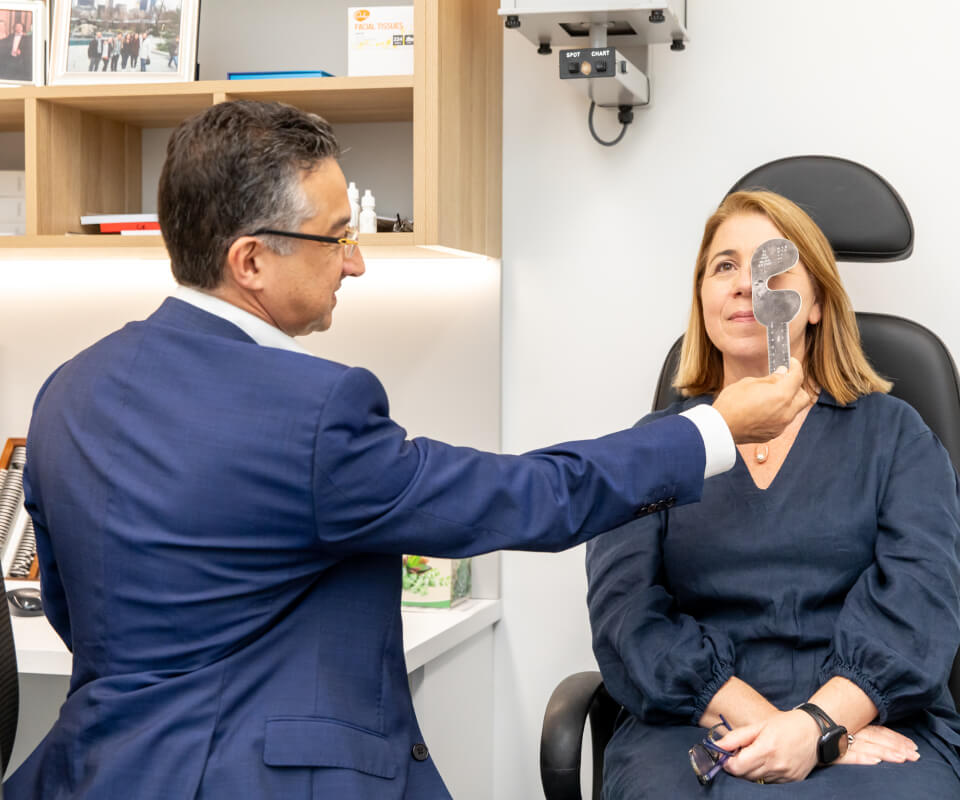
These conditions usually cause persistent irritation rather than sudden vision loss, with symptoms such as grittiness, redness, watering, or vision that blurs then clears when you blink. This page covers the conditions we most often assess at Eastwood Eye Surgery, with dry eye disease explained in the most detail because it is the most common reason people seek help.
Dry eye disease presents in aqueous-deficient and evaporative types, with the evaporative form being the most common and directly linked to blocked eyelid oil glands
A watery eye usually stems from a blocked tear duct, an issue with eyelid positioning or reflex tearing caused by surface irritation
Blepharitis generally responds best to daily lid hygiene and warm compresses rather than relying on long-term medication
Small pterygium growths are often simply monitored, while the specific clinical thresholds for surgery are detailed on our pterygium page
Most cases are initially managed in primary care by an optometrist or GP, with specialist reviews reserved for persistent, painful or worsening symptoms
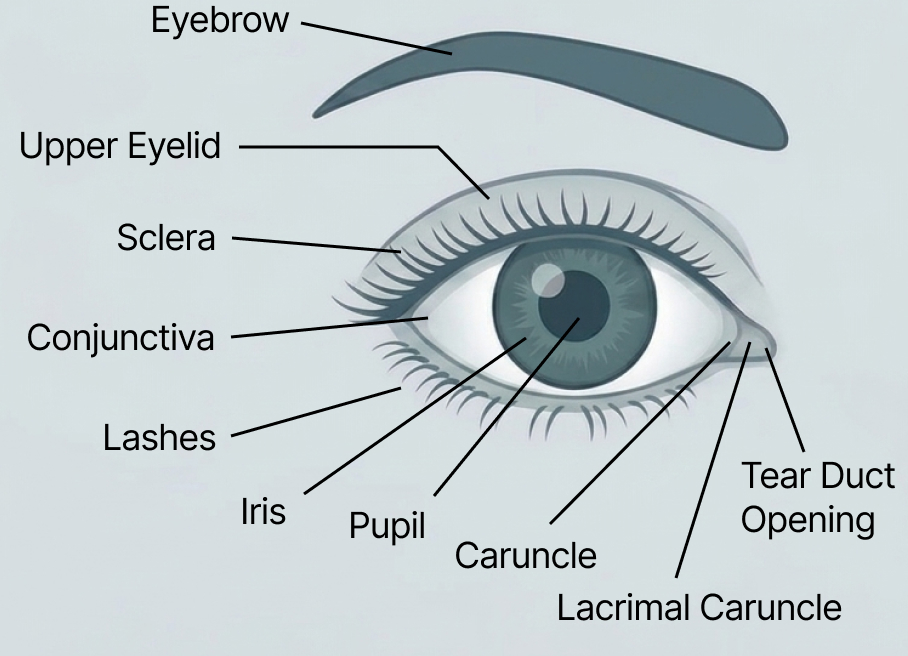
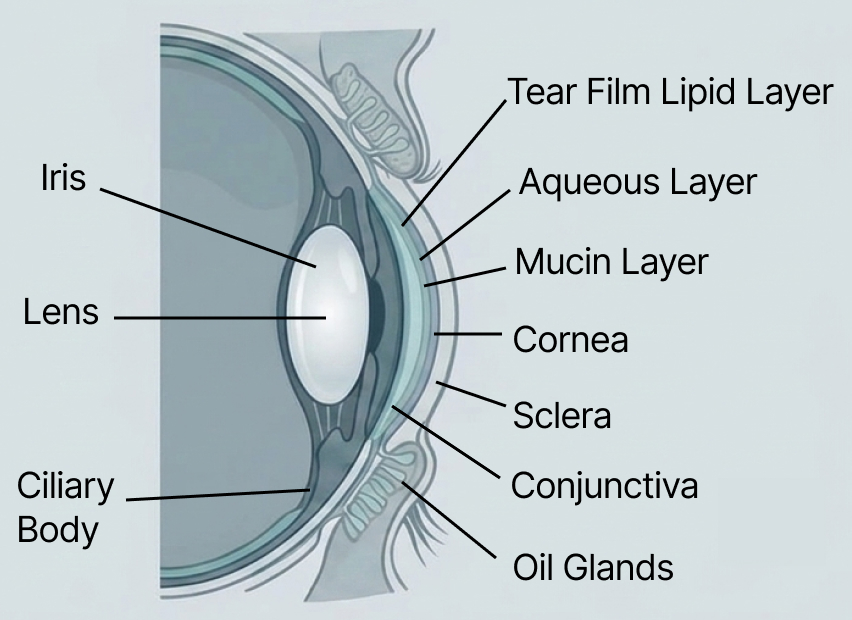
A stable tear film spread evenly across a clear cornea by healthy eyelids is what the front of the eye relies on. The tear film is the thin protective layer of moisture that keeps the surface smooth and comfortable. When any part of this system is disrupted, irritation usually follows.
The conditions covered here each affect this front surface in a different way, and many of them settle once the underlying cause is found.
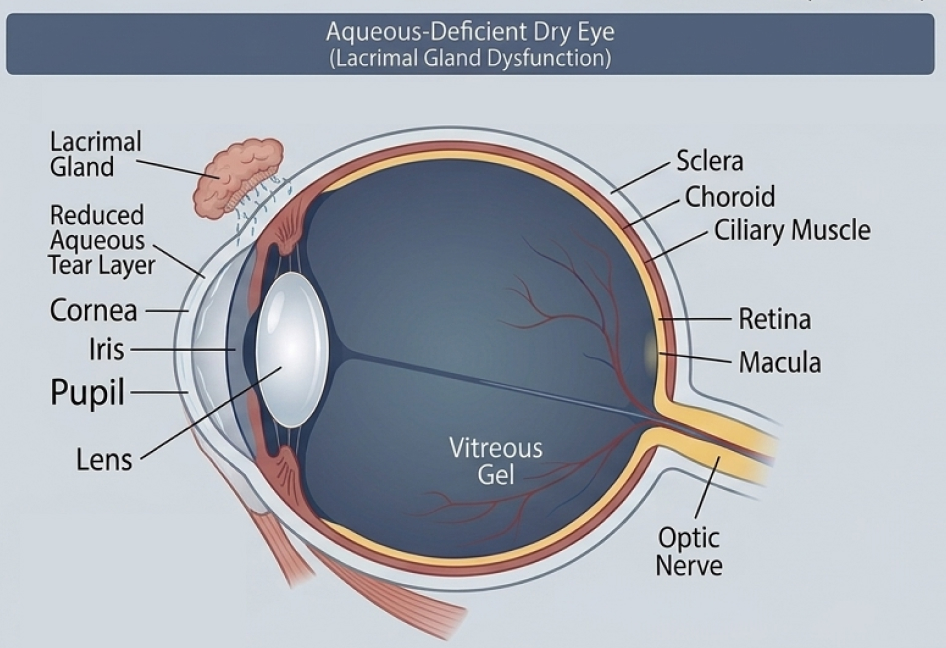
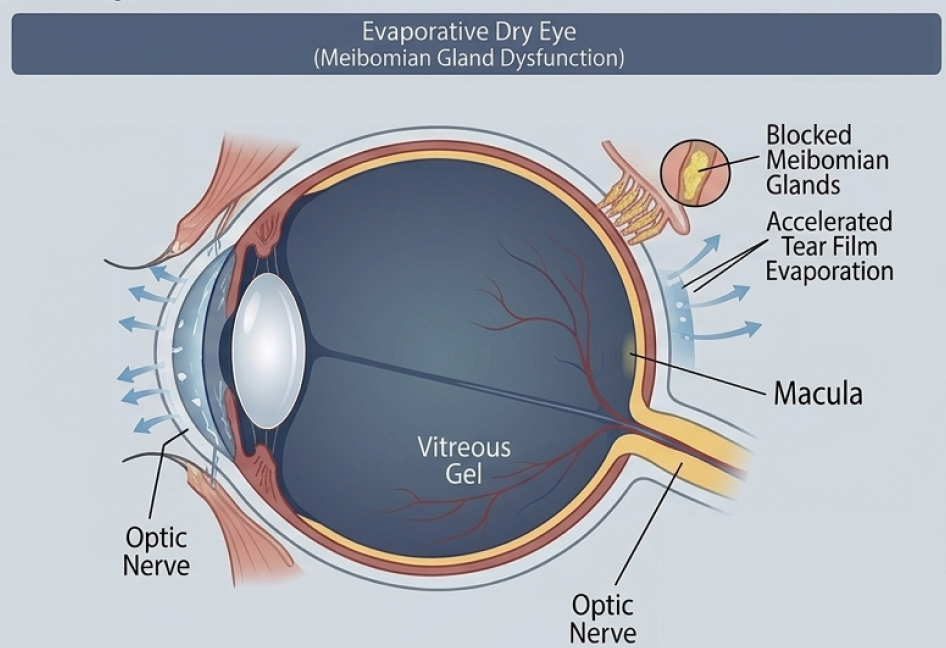
Dry eye disease is a chronic condition in which your eye does not make enough tears, or the tears you make evaporate too quickly. The result is an unstable tear film and a surface that feels persistently irritated.
Dry eye is widespread, and it becomes more common with age. It is common among Australian adults, with prevalence rising in older age groups.
Because the symptoms come and go, dry eye is often under-diagnosed. Many people live with it for years before seeking treatment. Left unmanaged, persistent dry eye can affect your comfort, your reading, your screen work, and your overall quality of life.
Two main types of dry eye exist, and many people have a combination of both.
Mixed dry eye, where both types occur together, is common too. This is why a careful assessment matters before any treatment begins.
Dry eye symptoms range from mild to debilitating and can change through the day. You may notice:
The watering can be confusing, because an eye that feels dry can also water heavily. This happens when surface irritation triggers a burst of reflex tears that drain away too quickly to settle the eye.
Several factors contribute to dry eye, and often more than one is involved. Common causes include:
Identifying which of these apply to you helps your surgeon recommend the right combination of treatments.
A chronic condition, dry eye is managed rather than cured, and for many patients symptoms may improve with consistent treatment. Your surgeon will tailor a plan to the type and severity of your dry eye.
Common approaches include:
We will review your response to treatment and adjust your plan over time, so the aim is steady, long-term control of your symptoms.
A watery eye (epiphora) is persistent tearing or overflow of tears from one or both eyes. It can blur your vision, irritate the surrounding skin, and become a daily nuisance. Sometimes it signals an underlying problem with how tears are produced or drained.
Common causes of a watery eye include:
Treatment depends on the cause, and your surgeon will explain which option suits your situation after assessment. Common approaches include:
Blepharitis is a common, chronic inflammation of the eyelid margins. It is frequently linked with meibomian gland dysfunction (MGD), where the eyelid oil glands do not work well.
Typical symptoms include red, itchy, or crusty eyelid margins, flaking at the base of the eyelashes, and a general feeling of eyelid discomfort or irritation. Because MGD is a major contributor to evaporative dry eye, blepharitis and dry eye often occur together. Managing one usually helps the other.
Most blepharitis responds well to consistent self-care. Treatment usually begins with daily lid hygiene, warm compresses, and gentle lid margin cleaning. In some cases, your surgeon may recommend a course of topical or oral antibiotics to settle inflammation.
For many patients, regular lid care keeps symptoms well controlled, though the condition tends to be ongoing and benefits from continued attention.
A pterygium is a fleshy growth on the conjunctiva that can extend onto the cornea. Small pterygia often need only monitoring.
A referral to a surgeon is appropriate when a pterygium grows, causes persistent irritation or redness, or begins to affect vision by encroaching on the cornea. We cover the causes, symptoms, and surgical management in full on our Pterygium Surgery page.
Most ocular surface symptoms can be managed by your optometrist or GP first. Over-the-counter lubricants from a pharmacist also help many people with mild, occasional dryness. Specialist review becomes worthwhile in specific situations.
Consider asking for specialist input when:
We work alongside your optometrist or GP, rather than replacing the care they already provide.

Your first appointment focuses on finding the underlying cause, so that treatment is targeted rather than trial and error. Knowing what to expect can make the visit feel more straightforward.
During the appointment, your surgeon will:
Bringing your referral letter and any previous eye test results helps us build a complete picture. Because many ocular surface conditions are ongoing, we will usually arrange a review to check how you are responding.
The pages below cover the surface growth described above and the surgery that removes it, and the eyelid conditions and procedures behind a watery eye or an irritated lid margin.
When a pterygium needs removing rather than monitoring, what the procedure involves, and how the risk of it growing back is reduced.
Eye conditionEntropion, ectropion, chalazion and eyelid lesions, including the eyelid position problems that make an eye water.
TreatmentThe surgical correction used when an eyelid turns inward or outward, and the other functional eyelid procedures we perform.
Further patient information:
RANZCO Eye Conditions (opens in a new tab) AAO What Is Dry Eye? (opens in a new tab)To arrange a dry eye assessment, contact our rooms to book an appointment. This step is for you if you have been referred to Eastwood Eye Surgery, or you are living with persistent dry eye, watering, or eyelid irritation.
Cornea and ocular surface services at Eastwood Eye Surgery are provided by specialist ophthalmologists. This information is general in nature and is not a substitute for personalised medical advice. Please speak with your ophthalmologist about your individual circumstances.